

1. A.I. Artificial Intelligence
My final, and most vulnerable, essay in the Spielberg/Williams countdown

I don’t cry very often or very easily in daily life. I have a pretty upbeat but flat disposition. I rarely laugh out loud, I don’t fly off the handle, and I tend to (unconsciously) stuff my stronger emotions way down deep. I won’t shout at my wife, but I’m likely to retreat into my psychological turtle shell and hide. I go to the movies to feel things, and no one has more consistently made me feel things than Steven Spielberg and John Williams. I may be an emotionally stunted human, but I can be a very emotional filmgoer. If a movie makes me cry, it’s likely going into my favorite film library. If it makes me weep, I will worship it.
A.I. Artificial Intelligence has been making me weep since I saw it three times in the summer of 2001 at a movie theater in Aurora, Colorado. I remember the first time I saw it, awkwardly shifting in my seat next to my mom during the brief exploits of Gigolo Joe and the gargantuan lady parts in Rouge City—and feeling very confused by the whole thing. I still thought of Spielberg as the boy genius who wove thrilling and heartfelt yarns like E.T. and Hook and Jurassic Park. I had already seen Saving Private Ryan, so I knew he also told darker, even brutal kinds of stories—but even my beloved Empire of the Sun fit into his role as a nostalgic and emotional dream-maker. I guess I had certain expectations for A.I.—which I went into knowing only that it was about a robot who wants to become a real boy, like Pinocchio, and which I thought would be a fairytale like E.T.—and those expectations were upended, or at least scrambled.
Still, I knew one thing: I needed to see it again. After my second viewing, I loved A.I. After the third, it was my favorite film of all time.
And it has remained my favorite for a subsequent quarter of a century.
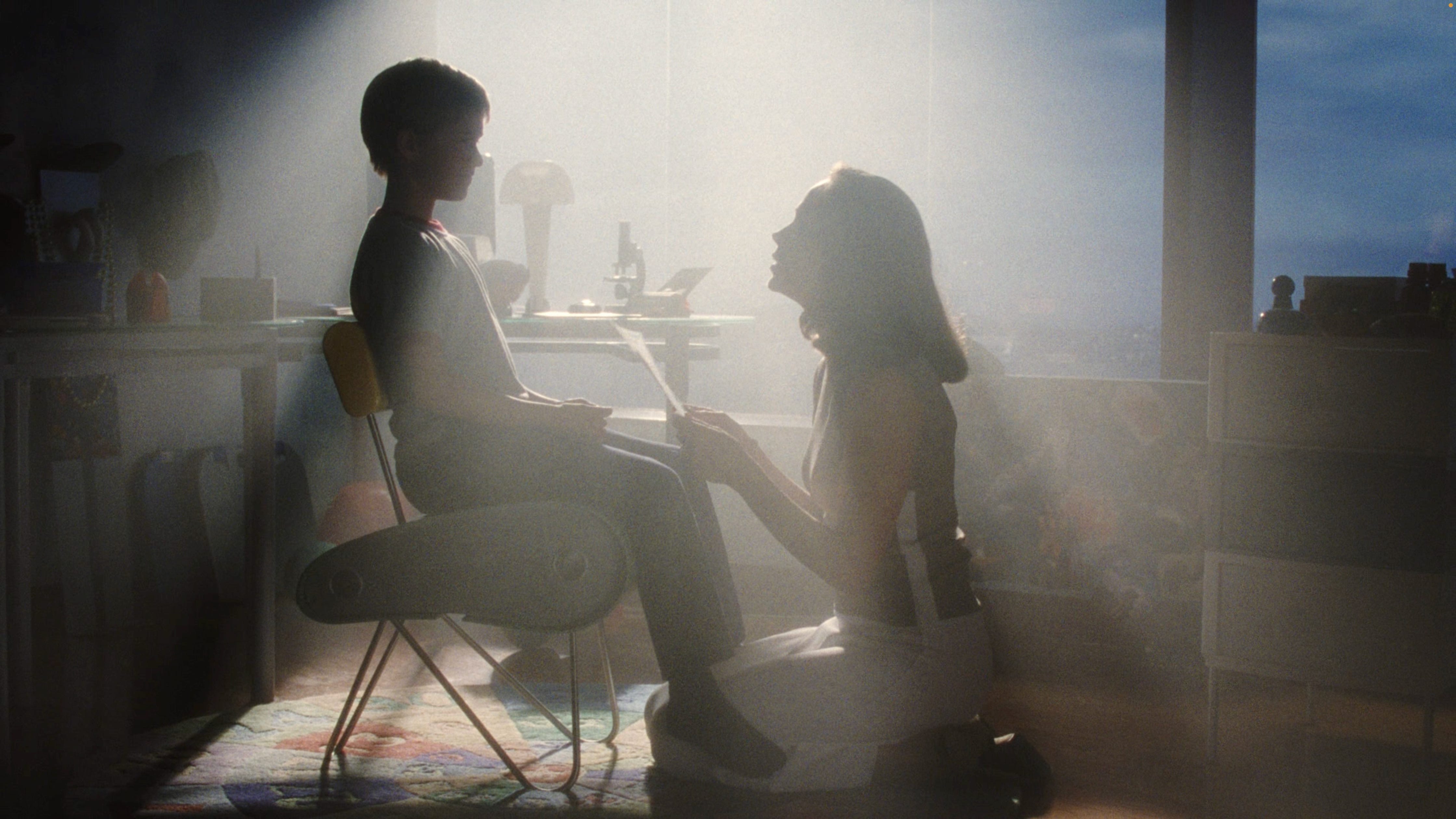
Looking back, the ways in which A.I. defied my expectations were the alien strains of Stanley Kubrick’s DNA. It was bleak. It was cold and a little clinical. It was, in some ways, hopeless. But its ending made me feel love, made me feel heartbroken in the most delicious way. David, at last, was with his mother who loved him, and he finally got to close his eyes and go to that place where dreams are born.
In the summer of 2001, I was 16 and still a little bit like David: young, sheltered, naive, curious about the world and also bewildered by it, dreaming big dreams. I loved my mom and dad and four siblings, and all I wanted was to be a good boy. If you let me, I’ll be so real for you. But I was also metamorphosing—and not just by way of puberty, although that was certainly playing on a 24-hour loop inside my machine. I had no Gigolo Joe to teach me how to seduce women, although I had plenty of authority figures telling me to keep those kinds of thoughts as far from my head as humanly possible.
Religion loomed large that summer, as it had for my entire childhood. I was still going to church three times a week with my family, but privately, inside my head, I had decided I was an atheist. I just couldn’t reconcile material reality and “common sense” with (what I considered) the outrageous and metaphysical tenets of the Christian faith, and that summer I sat in the teen pew at church with my friends passing silly notes and drawings and, inside the half-baked childish seminary of my mind, disparaging the doctrines I heard in an endless litany of sermons and classes and “invitations” and songs that asked “Oh why not tonight?” because if you don’t believe in our all-loving God and get baptized for salvation, you’ll burn in hell for all eternity—a never-ending Flesh Fair for evil sinners and all the poor saps who signed up with the wrong denomination.
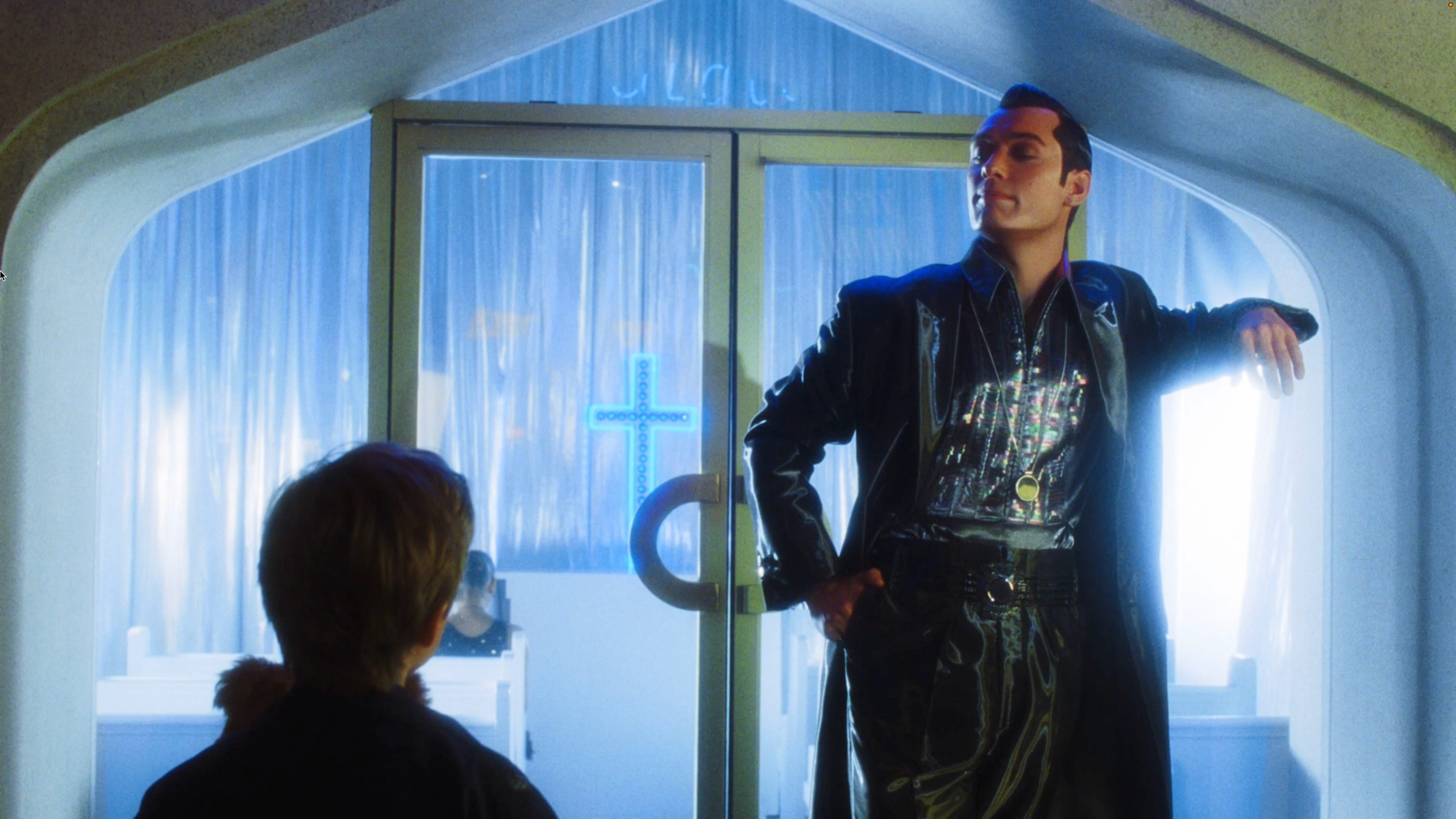
A.I. was a new religious text that confronted and gave voice to my doubts and my beliefs. It was about a fallible, broken, arbitrary creator with a god complex, who at the very beginning of the movie asks a rhetorical question: “But in the beginning, didn’t God create Adam to love Him?” From there the film explores an overtly theological premise about a created being searching for a mythological, godlike figure—the Blue Fairy—in hopes of being born again, saved, and finally winning the approval and love of his angelic mother. When David and Gigolo Joe stop at a neon-lit church in sin-soaked Rouge City, Joe explains to David: “The ones who made us are always looking for the ones who made them”—a line that made God sound like just as much of a fairytale as any other.
When David at last arrives at the place in Manhattan “where the lions weep,” he discovers another identical David... and his faith is instantly destroyed. He has an existential freakout, smashes his doppelganger’s face in, and slumps into despair. “I thought I was one of a kind,” he cries. To which his actual creator—Professor Hobby, who is kind but definitely not divine—replies, “My son was one of a kind. You are the first of a kind.” Maybe, this movie seems to suggest, God created all us interchangeable, programmed robots because he couldn’t get over his son’s death.
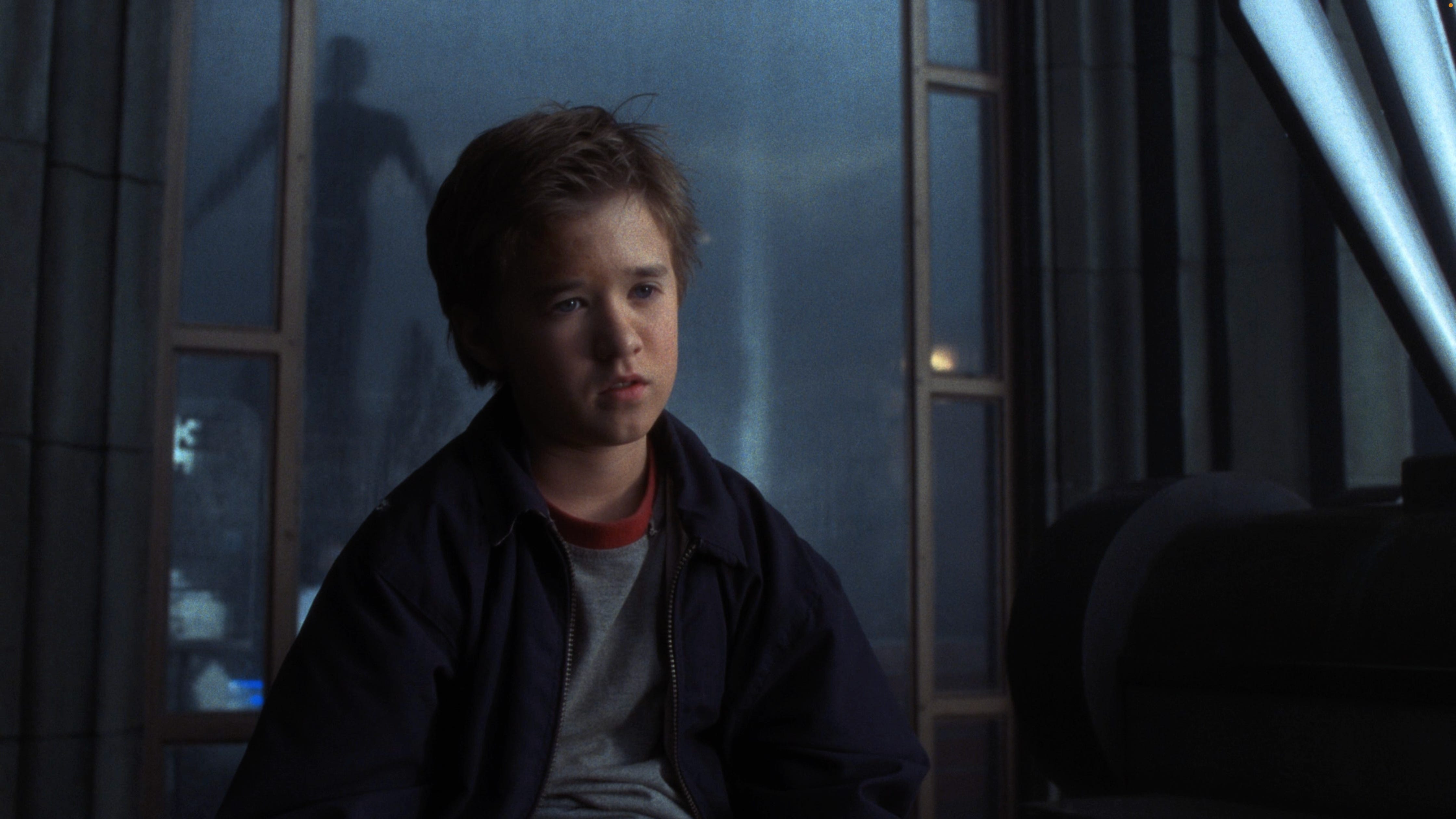
A.I. poses gigantic, cosmic questions—about God, about sex, about death, about mothers, about hope, about the afterlife. The ending is a Rorschach test: to some, it’s a ridiculously sentimental copout, Spielberg smothering Kubrick’s rough edge of realism with a coat of sugary frosting. To others, it’s impossibly tragic: a loving but eternally unloved boy lying next to the corpse of his mother’s clone, stuck in an unending hell of mechanical existence, forever alone.
For me, it is a sobbing dam-break of profound catharsis. After going on this epic odyssey with David, seeing him try and fail to win his mother’s love only to be abandoned by her in a forest, trudging through the wasteland of a world where humans hunt and destroy his kind for sport, learning he’s merely a simulation of some inventor’s dead kid, throwing himself into the ocean to die, then finally finding the Blue Fairy and praying, pleading, to become a real boy, only to become trapped underwater for 2,000 years... he is at long last reunited with his mother, who gives him the one perfect day he never got to have but always longed for, and then falls asleep next to her and, for the first time in his life, he gets to sleep... and to dream. He is finally loved, and he thus becomes a real boy. With John Williams’ most exquisite melody lulling him to that realm as the film fades to black, I shed rivers of warm saltwater and very human tears.
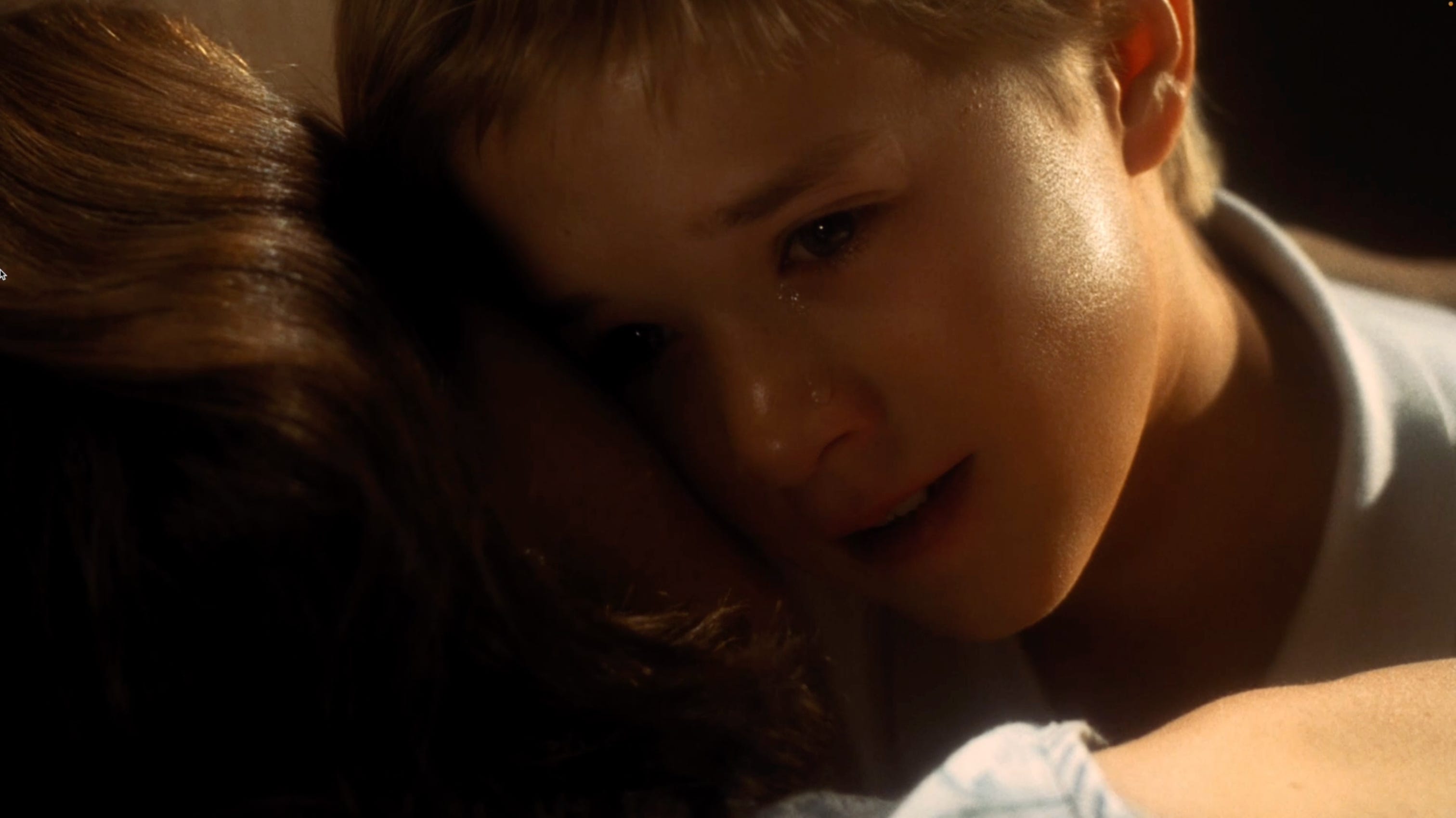
Maybe it was around that summer that, without realizing it, movies had become my religion. Spielberg was like a god to me, and John’s scores my most sacred music. I began to worship the myths and dreams and stories and feelings that they created together, and to evangelize film scores—which eventually became my whole career. A.I. was the centerpiece, and I have returned to this sacred text over and over again for 25 years, finding new insights and revelations, discovering fellow believers, dreaming new dreams. It is, for me, an allegory for the atheist’s comfort. Can we ever truly find the love we were programmed to need? That’s where Spielberg’s stubborn philosophy of redemption comes in. Fairytales may be fiction, God may not exist, and life may be ultimately meaningless (“vanity of vanities,” to quote Ecclesiastes). But to love and be loved in return—which is the deepest longing of the human heart, the code we are all programmed with—that can be achieved. For Spielberg, that’s all that matters in the end (that and empathy), and it’s what promises redemption and peace. When you wish upon a star, that dream, at least, can come true.
I was amazed to discover that Bonnie Curtis, the producer of A.I. who started out as Spielberg’s assistant during the years he was trading faxes about A.I. with Kubrick, grew up in the same, tiny denomination I did, the one I was so itchy to escape. She left it, too, also leaving the closet as a lesbian and going to Hollywood to work for (as she jokingly put it) “the King of the Jews” to the astonishment of her mother, who remained a Bible teacher in their home Church of Christ in Dallas. “Anytime there were Biblical questions,” Curtis said, “Steven would often come to me, and I would call my mom. This is pre-internet; I was the Biblical internet for Steven back in the ’90s. But I find a ton of Biblical references through all of Steven’s work, and a lot of George Lucas’ work. You know, the forces of good and evil, and the power structure, and something bigger than ourselves... I’m constantly finding Biblical truths. I think it’s just part of Steven.” When I stumbled onto this strange serendipity of Curtis and me sharing the same quirky religious background (and also learning that her wife, who was in the art department on A.I., is, like me, from Aurora, Colorado), she showed me a painting that was created for the film—an homage to Michelangelo’s The Creation of Adam, but with a metallic robot touching the finger of God.
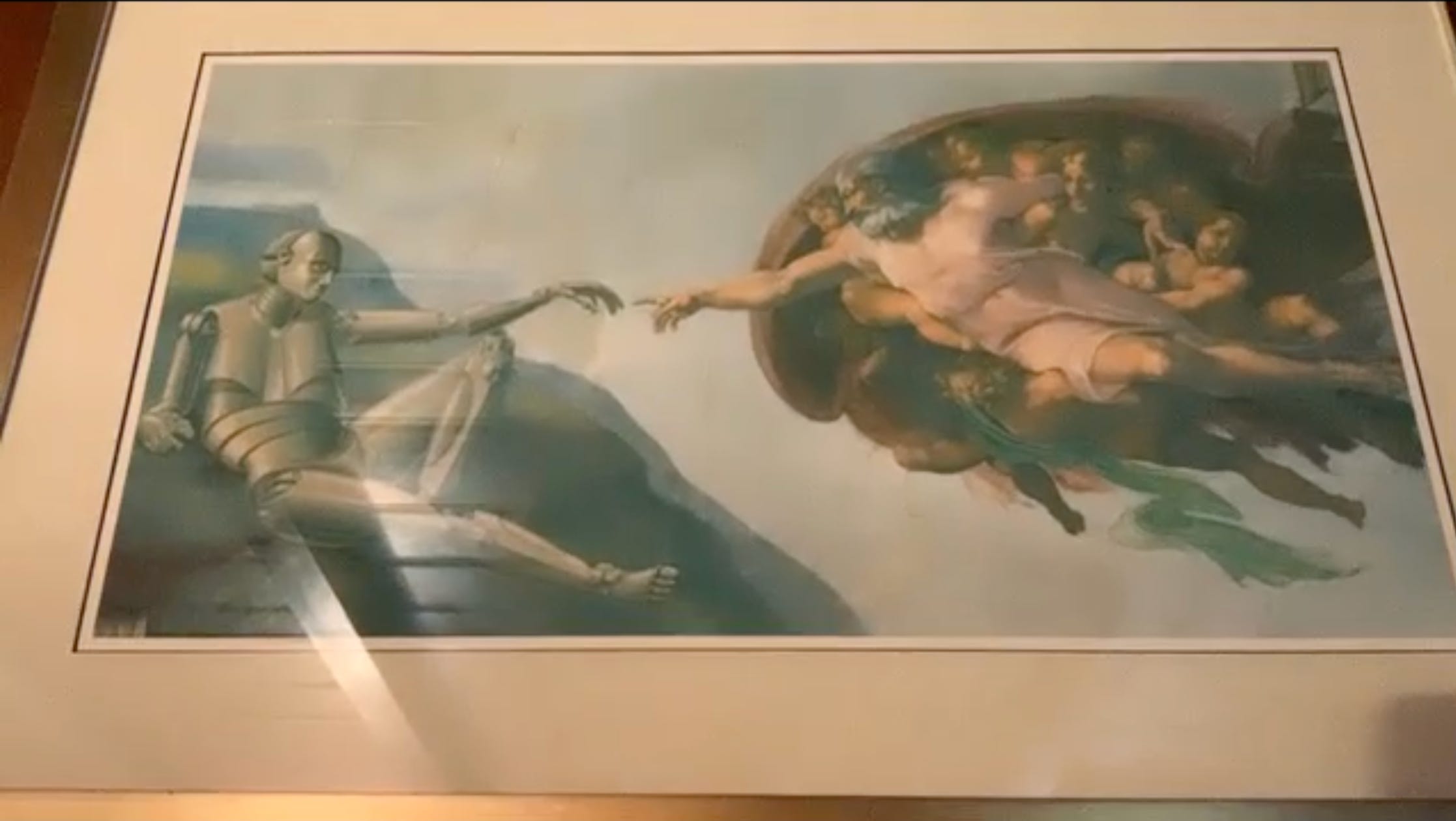
I told Curtis that I keep finding new Biblical allusions in A.I., and wondered if they were intentional. Two brothers, one innocent and one devious—just like Cain and Abel. David stuck underwater in a mechanical “whale”—just like Jonah. In the end, a resurrection. “I definitely brought up Jonah during the water sequence,” she said. “Let’s put it this way: I don’t think there is an intention, but I don’t think there’s an ignorance.
It’s just authentic. Steven is an incredibly good man. … I think a lot of the themes and spiritual allegory coming out of his stories, it’s just coming out of him. He’s just connected to things that he has found a way to express, and clearly deeply affected not only you, but hundreds of thousands of human beings. And made us better people.
I was equally astounded when I discovered that Brian Aldiss, the science-fiction writer whose short story, Super-Toys Last All Summer Long, was the genesis for A.I., was an Oxford man... and a friend of C.S. Lewis. Lewis was my favorite Christian writer—my favorite writer period—when I was a young man... not for his fantasy series, but for his nonfiction books on Christian apologetics. He was rational, British, and elegantly practical and poetical in his defense of believing in the God of the Christian Bible. His writing actually wrested me out of my teenage atheism and made it viable and logical—even beautiful—to believe again. That reformed faith would grow and grow in blazing intensity into my twenties… until it ultimately collapsed again some ten years later. How unbelievably strange that the writer who gave me faith was friends with the writer who (indirectly) consoled me when I lost it for both the first and second time.
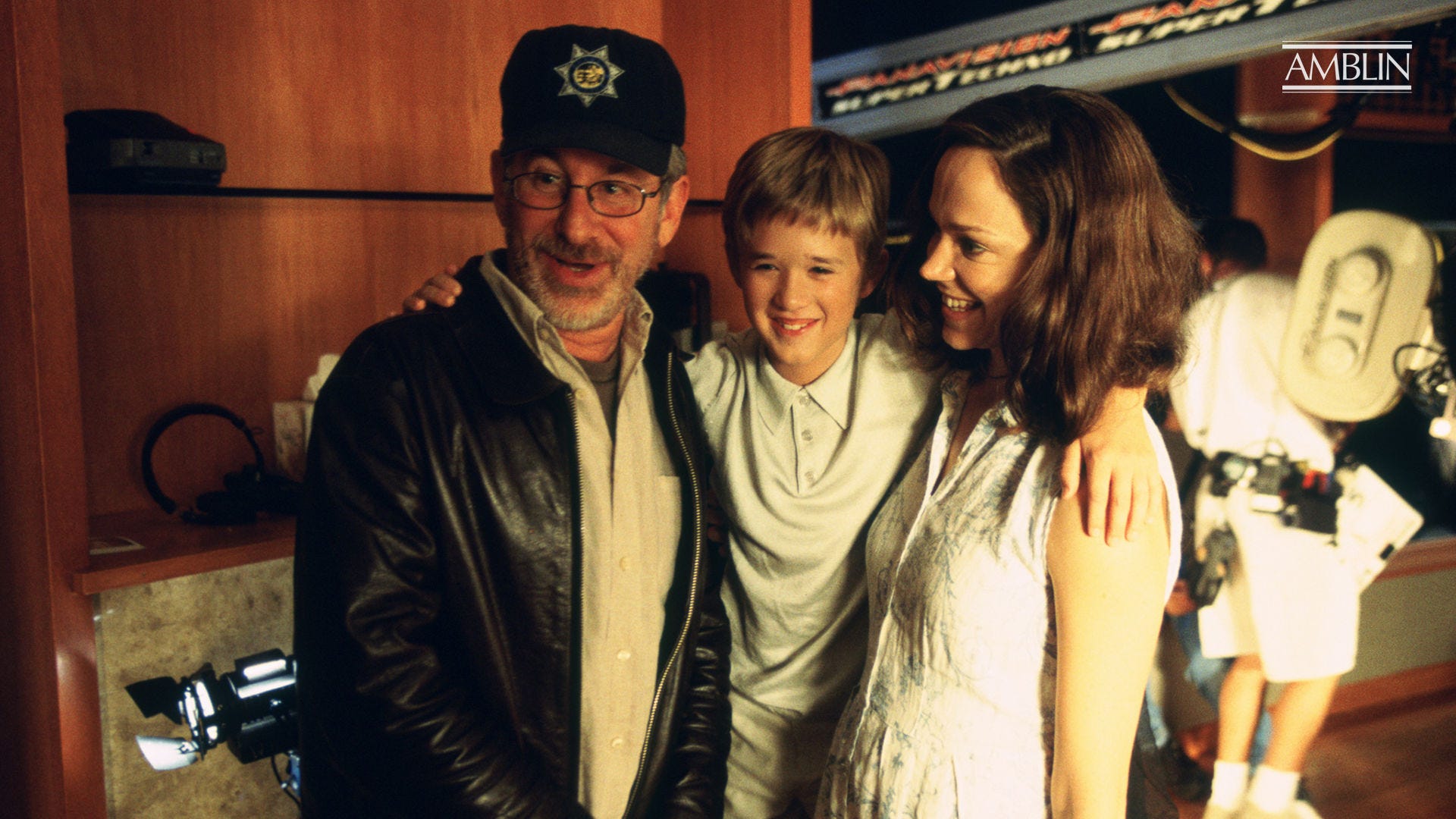
How strange, too, that Stanley Kubrick shared the story of A.I. with Steven Spielberg in 1984—the year I was born. Kubrick had been slow-cooking this dream film since the early 1970s, and kept tinkering with the tale while he made other cult films; but he intuited, even though he was deeply, personally drawn to this modern Pinocchio myth, that it was probably too warm for his frosty, cynical heart. He realized it had be a Steven Spielberg film. These two unlikely friends would talk about it over the years, fax each other treatments and notes, and dream, but an actual, living collaboration was not meant to be. The moment Kubrick died, on March 7th, 1999, Spielberg dropped everything and locked himself away to spill out a screenplay based on the decades of conversations he’d had with Kubrick and the piles of development materials shipped over by Kubrick’s brother-in-law, Jan Harlan. He swiftly assembled a cast and crew, and had a finished film ready less than two years later.
Kubrick “truly believed Steven would be the better director for this film,” Harlan told me, “and I think he was right.”
In the fall of 2001, I started my junior year of high school. I had been homeschooled through eighth grade, and I attended a hybrid high school with other Christian homeschoolers—we only met for classes on Tuesdays and Thursdays, lugging giant plastic bins filled with heavy textbooks to makeshift classrooms in a building borrowed from an evangelical church located inside a strip mall which shared a parking lot with a sex shop. (My high school was in Littleton, Colorado, where just a few miles away the infamous mass shooting at Columbine High School had taken place in the spring of 1999, only a month after Kubrick’s death.)
I was in our religious all-school assembly on the morning of Tuesday, September 11th, 2001, when we learned about the planes hitting the World Trade Center. Spielberg’s film had been shot earlier in the year, and so even in his decayed, partly submerged skyline of a far-off future Manhattan, the Twin Towers stand tall. 9/11 and its psychic aftermath probably hurt A.I.’s take at the box office—Harlan believes it did—and it cast a palpable pall on Spielberg’s next few films, particularly Minority Report with its grim, violent, urban future, and War of the Worlds, where alien terrorists down commercial airplanes and pulverize terrified Americans into clouds of ash.
Kubrick had foretold a very different but no less fearsome year 2001. His 2001 was filled with Mad Men in chic spaceships, but also malevolent machines and a terrifying head-trip through time. 2001: A Space Odyssey was psychedelic and groundbreaking, a button on the 1960s that presaged the moon landing and Hollywood’s obsession with outer space and aliens throughout the 1970s. It was as paranoid and cynical as its zeitgeist of Vietnam and Watergate, a chilly take on humanity from our ape past to our machine future.
When Spielberg’s answer to Kubrick’s film arrived a decade later, Close Encounters of the Third Kind was as warm and personal as 2001 was not. For the boy wonder, extraterrestrials were enlightened and benign, potential friends and teachers. Encountering them, for Roy Neary, is a religious experience which plants a powerful obsession that fuels a quixotic odyssey wherein a father abandons his children and climbs a holy mountain to touch the hand of these small gods from the stars. And at the beating heart of Spielberg’s personal science-fiction epic was… Pinocchio. Roy wishes on a star that he will make contact with the divine—not God, but highly intelligent beings who communicate through music—and his dream comes true.
Where Kubrick was detached and icy, Spielberg was a romantic, burning with faith in human goodness and redemption (and, as my friend Alexandre Desplat recently said, “love of the stranger”). The robots and aliens—and fathers and lovers—in Kubrick’s cinematic worlds are ominous and threatening. His camera is like a predator stalking its prey, a silent, spying voyeur. Dreams don’t come true, and they’re usually nightmares. There are no comforting, resolving John Williams melodies in Kubrick’s films—only frightening choral caterwauls and the ominous electronic declaration of the Dies Irae.
Spielberg, on the other hand, was framed by Walt Disney and scored by big, tuneful movie music, and he believed in the power of love and chasing the impossible dream. His camera is a dance partner that waltzes with the audience and flings it deliriously into the air and over the moon. Yet he had also felt treated like an alien for being Jewish, and abandoned when his parents divorced. His film worlds are filled with lonely, fatherless boys and the fantasies that help them survive and make sense of life.
Many critics and audiences saw A.I. as an awkward, forced marriage—but those of us who worship the film recognize it as a potent, complex cocktail of disparate but not entirely incompatible worldviews and aesthetics. Kubrick the hard, unfeeling human. Spielberg the soft, ever-loving, ever-dreaming, ever-believing robot boy. Kubrick’s Rosebuds are everywhere in this film—from the horrific vision of mankind’s future to the crafty use of a Richard Strauss needle-drop. But so, too, are Spielberg’s. In fact, A.I. is like the skeleton key that unlocks his entire body of work: it’s about a wide-eyed boy who literally can’t grow up, in which Pinocchio is the central sacred text and a guiding light for the boy’s life quest, where a mother deserts her sobbing son and he spends the rest of his life looking for her love and in the meantime he takes journeys into water, into the sky, and into the future. He even escapes a holocaust.
The ending, as Kubrick and his parade of writers conceived it, is bleak. But through the filter of Spielberg’s unrepentant humanism, and scored with John’s most beautiful lullaby melody, it becomes hopeful… it becomes sublime.
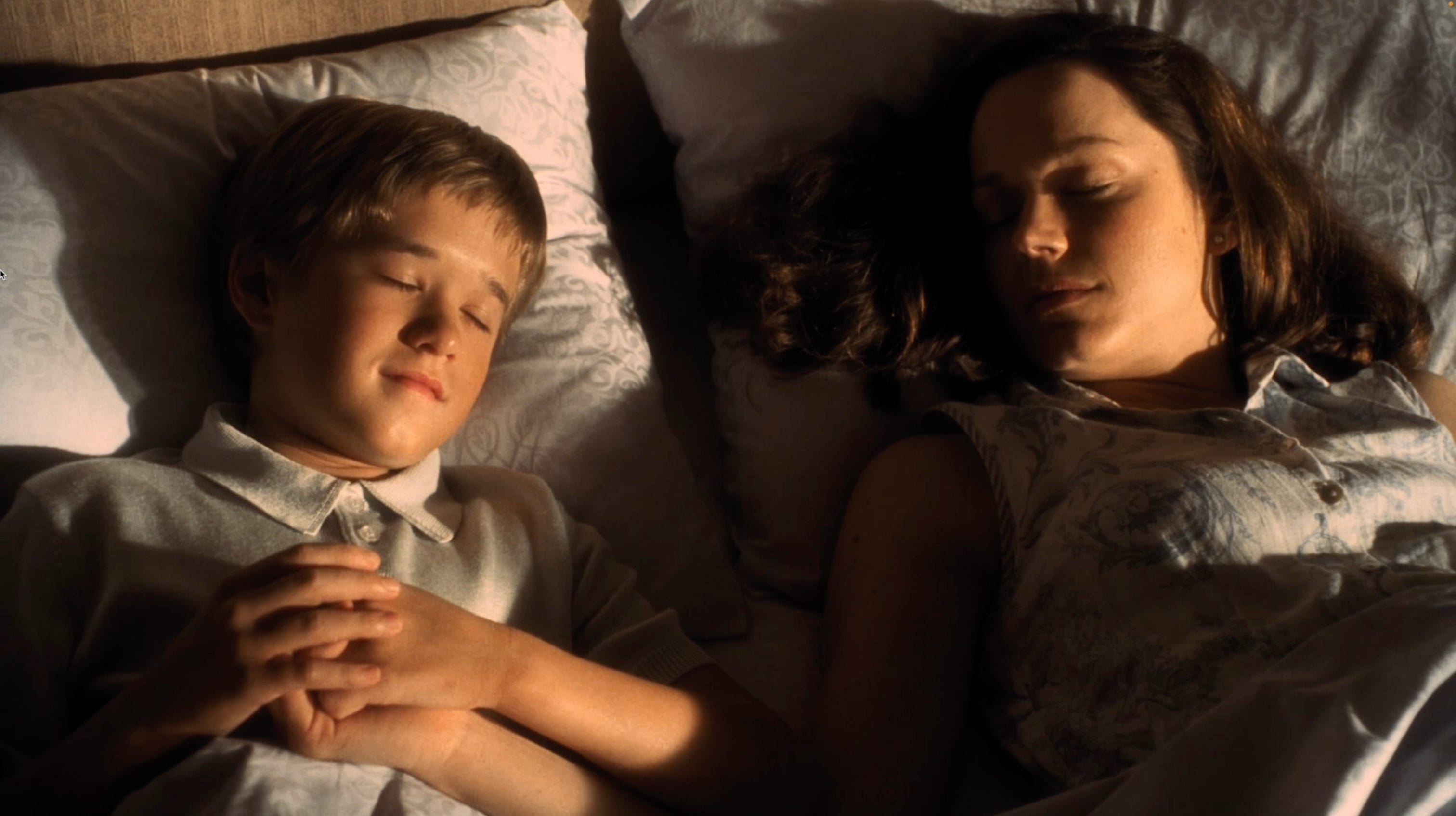
A.I. is my Rosebud, too. It’s where I buried my premature faith in God, and where most of my other dreams were born. For some reason (which I’m still exploring with a therapist), I keenly identify with this abandoned boy... as I do with the other abandoned boys in Spielberg’s canon—Elliott, Jim Graham, Peter Pan. Sitting behind me right now are a porcelain figure of the Blue Fairy from Disney’s Pinocchio and a stuffed Teddy from A.I. This movie is a huge part of what led me on my own quixotic quest to write a biography of John Williams. I became a film music journalist because of him, and I’ve now written his life story—with his help. I have gone to that place where my dreams were born.
When I heard John’s score for A.I. those three times in the theater, and then a million more times on CD, it seeped into the deepest grooves of my soul, a permanent alteration of my being. I took the CD with me on a mission trip to Jamaica (you’ll recall that I became a believer again for a while), and I lulled myself to sleep with it in a creepy motel room as the terrifying noise of a storm convinced me that someone was trying to barge through the door. I taught myself how to play that bittersweet lullaby, and I played it on the pianos in my childhood home, my Christian college, and in a practice room at USC during grad school where, a stone’s throw away, stood the John Williams Scoring Stage. I followed that melody to Los Angeles, where I entered the world of film music through a side door and interviewed composers and directors, wrote articles and liner notes, and finally, in 2013, had my first encounter with John himself. I felt like David meeting the Blue Fairy.
I realize this essay has been full of sacrilege and heresy. But I’m 41 years old, and I’ve grown increasingly (if slowly) comfortable expressing myself and not worrying too much if it will offend the church folk in my life—or even my beloved parents. They have continued to love me unconditionally and have never, and would never, abandon me in the woods. It’s just a plain fact that A.I. crystallized my agnosticism and gave me a new religion, one that has fueled my deepest feelings and guided my path to writing about Spielberg/Williams.
A.I. is uniquely important to me—and it is also, I hope, the subject of my next book.
Tim, A wonderful essay. Thank you for sharing. Every time I watch A.I., it solidifies its place on my personal top 10 list. I have a hard time explaining to friends who dislike -- even hate -- the movie so much why I like it so much. Your essay will help in that regard. --- Saw Disclosure Day yesterday. Its final scene may be Spielberg's best since A.I. I actually teared up, partly for the scene itself, but mostly because my mind wandered to June 1975, the first time I saw/heard the Spielberg/WIlliams collaboration, and feeling that this one will be the last.
I only saw this movie this year, in my childless mid-40s- *after* seeing 'The Fablemans.' So I feel like I got the completely wrong context. XD And for most of it, while I thought it was well made and thematically strong and imaginative and all that, I also thought it wasn't working for me. I was at a distance.
Then I got to the ending (specifically the part where we're 0:48s into "The Reunion" on the soundtrack) and I started choking up. John Williams is good, but he's not so good that he can't make me cry by himself, so clearly the movie was working on me with more subtlety than I thought. For that, while I do *like* other Spielberg movies more, I have to consider this one perhaps his best.
Thanks for sharing such a powerful reaction to the movie, and taking us on this countdown journey! It's been a consistently great and engaging read!