

2. E.T. The Extra-Terrestrial
Of closets and bicycles, gods and men

In E.T., one of the central locations is a child’s closet, so much so that it practically becomes a character unto itself. Which speaks to the fact that, in some ways, the ambitions of this film were always relatively small-scale; Steven Spielberg referred to it as a “tiny epic.” But the prominent closet also symbolizes just how intimate, and how domestic, this movie’s power is—and how one of its deepest meditations is on the homes we grow up in and the epic dramas that play out in our childhood bedrooms, kitchens, dining rooms, and garages during the foundational chapter of our lives.
Think about the many scenes and moments that take place in Elliott’s closet. This is where Elliott hides E.T., so it often becomes the site where the children and E.T. connect. In a way, the closet is a temple in this suburban myth, the place where a god from another realm interacts with ordinary mortals.
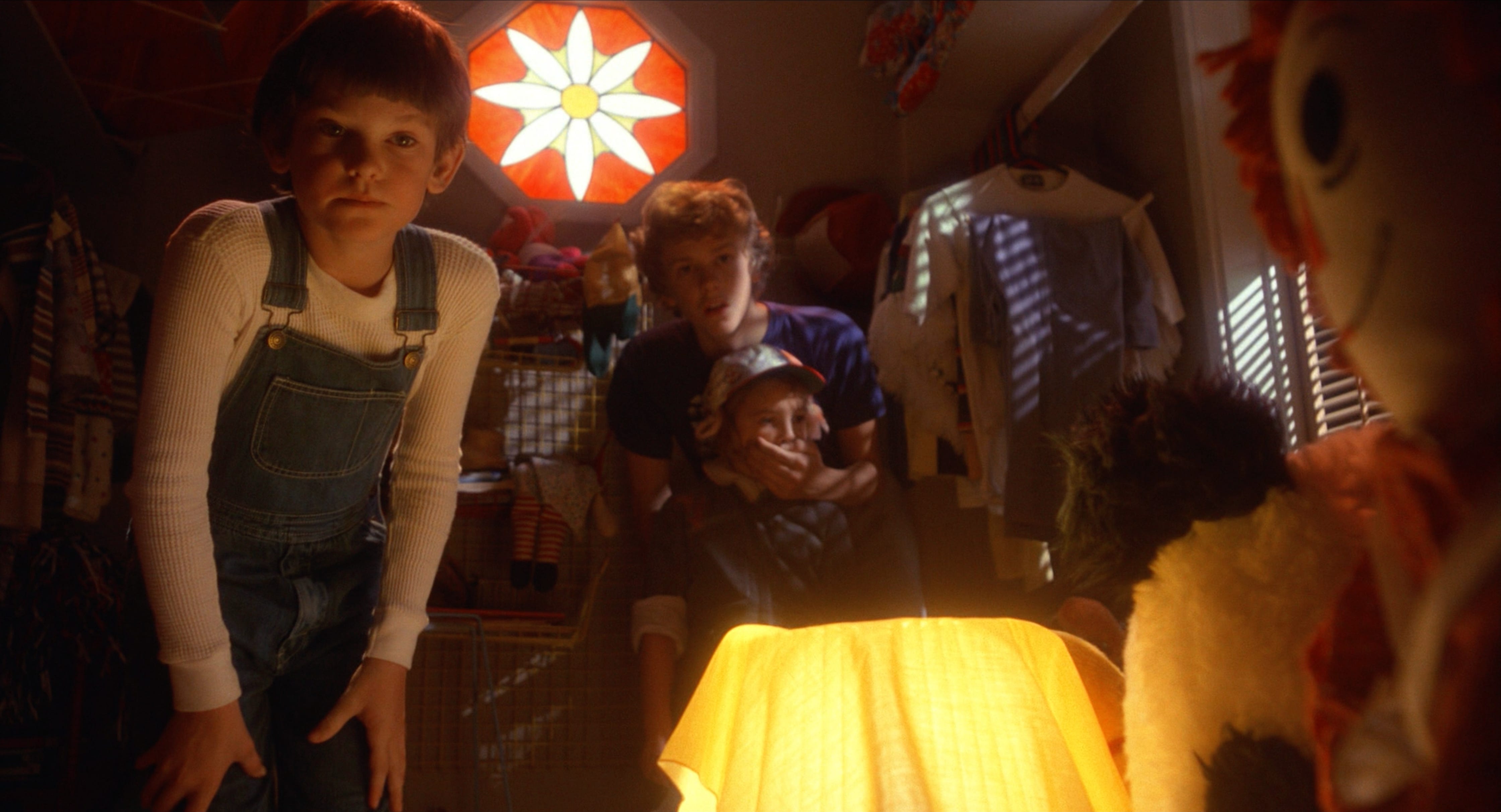
Closets are where we store our clothes and everyday items—but they’re also where we hide secrets and our most precious possessions. For children, closets are a fortress, a vault, as well as a boundless playground. They’re even, in a way, like a womb—a confined but cozy spot where we can surround ourselves with things that bring us comfort, that make us feel enclosed in care. In E.T., Elliott’s closet is filled with his fuzzy childhood “friends,” which gives us this brilliant, and incredibly funny, visual:
Late one night, Mary (Elliott’s mother) reads from Peter Pan to her youngest, Gertie, who is entirely engrossed in the fantasy. So is E.T., who watches quietly through the slats of the closet door. The alien puppet’s face is still and mostly blank, and it’s certainly a bit of Eistensteinian magic—of creating meaning by cutting from one image to another—but it is magic how Spielberg and Williams can make us feel that he is feeling something here (the music is John’s delicate “E.T. and Me” theme for harp and strings), some kind of compassion and innocent longing, maybe even heartache, at the sight of a human mother bonding with her child over a fairytale. A spell is cast, and we can feel E.T.’s feelings. He cares about these strange creatures… and perhaps he’s missing his own mother.
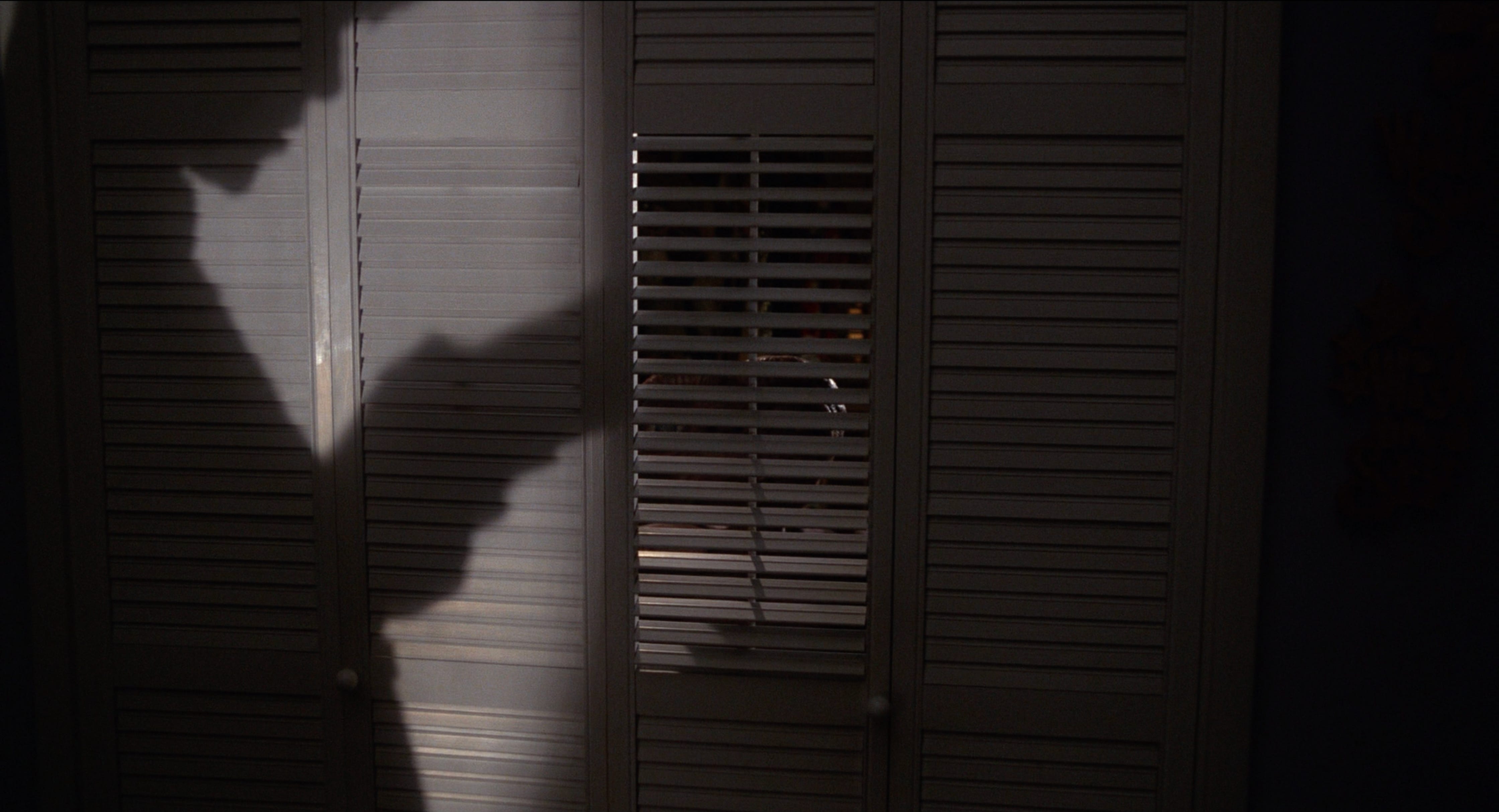
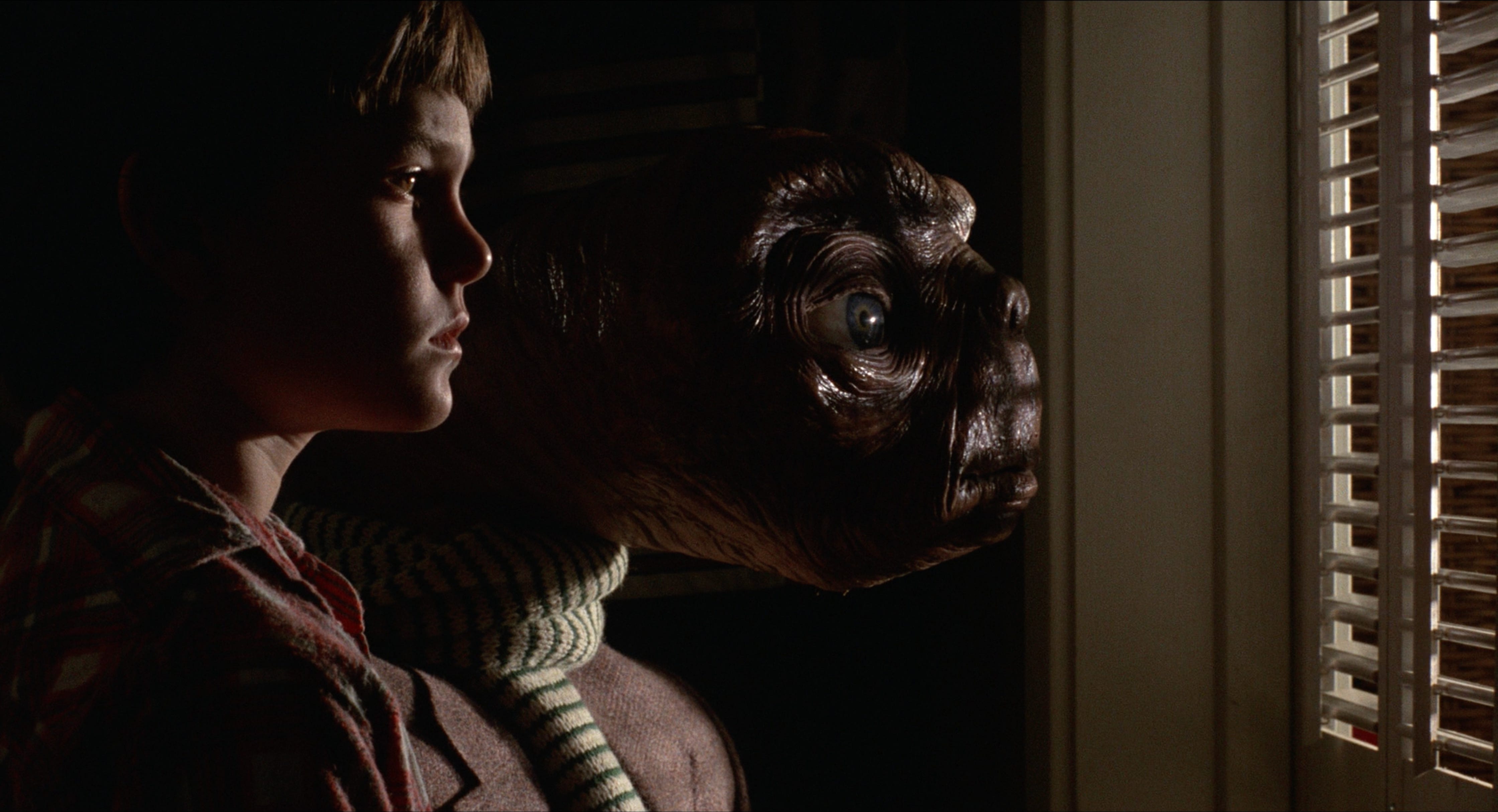
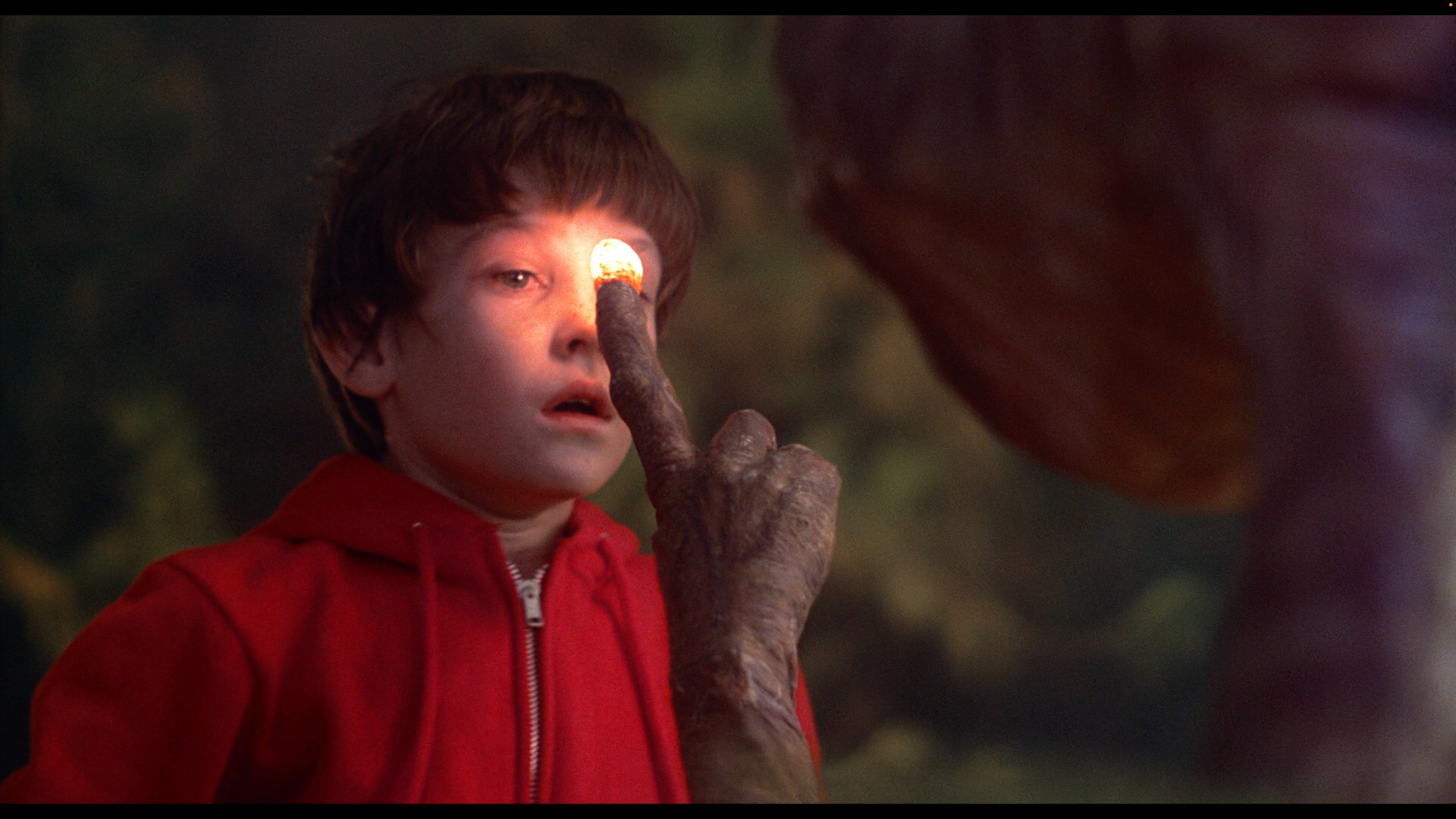
It is here in the closet where E.T. first heals Elliott, who pricks his finger on a circular saw blade—the supernatural parable becoming even more explicitly messianic.
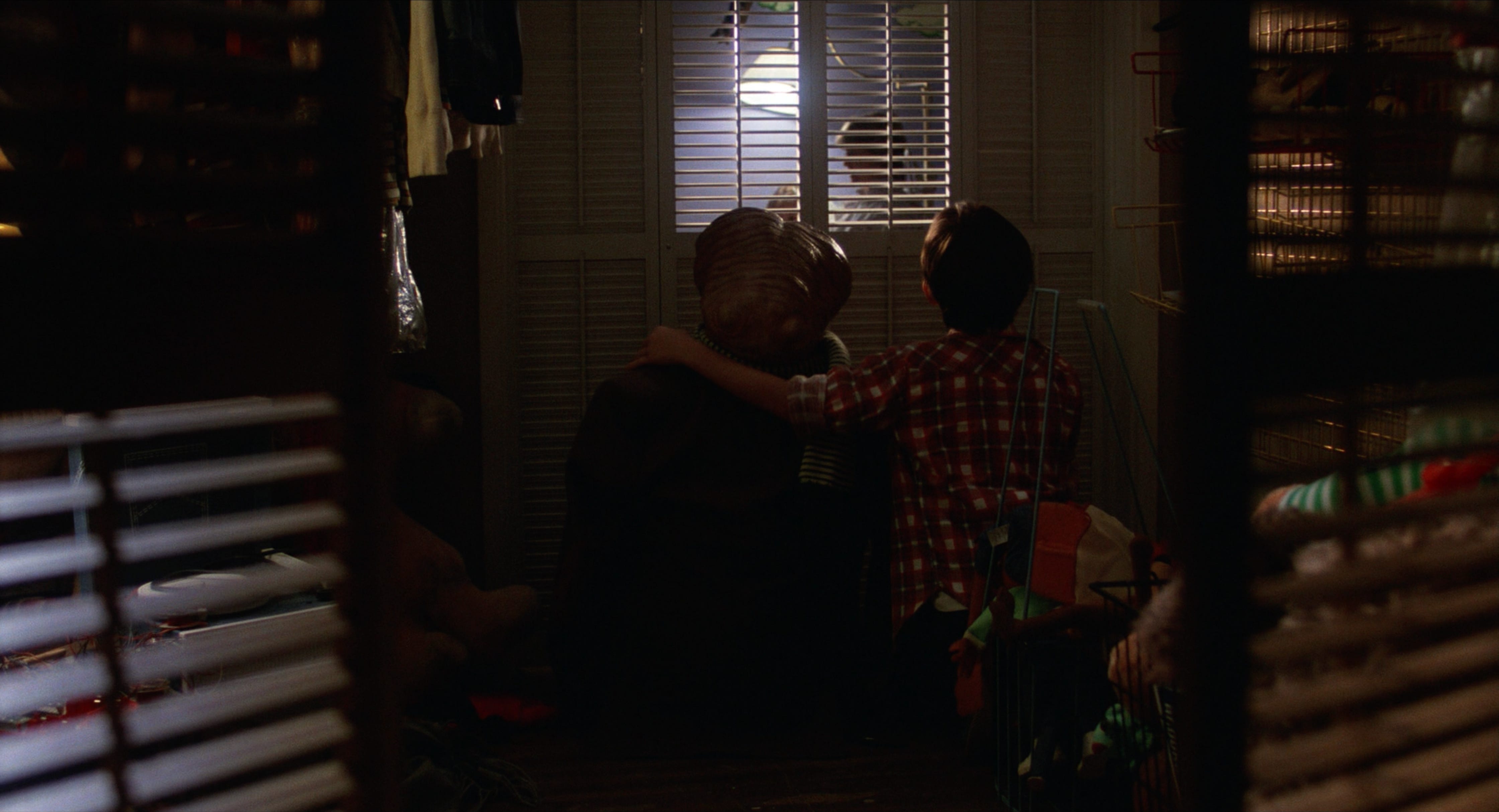
The last and maybe my favorite moment in this holy closet is when Michael—the oldest, who’s always posing as a cool, mature teenager—takes refuge here. E.T. is dying downstairs, and Michael retreats and becomes a little boy again, curling into a fetal position inside this safe crib. John’s music here, which so captures the poignant, melancholy ache for a return to the comfort and safety of childhood, is simply exquisite.
E.T. is such a small movie. Yes, there’s the great forest and the bicycle chase and the moonlit sky, but these are all on the periphery of the main stage—a boy’s suburban home. Spielberg lovingly explores the driveway, the cluttered dining room, the back shed, the kitchen (with its full fridge and hot steam rising from the sink), the noisy TV room, the hallways, the flower pots, the garage (with its flannel shirt still bearing an absent father’s scent), the bedroom full of action figures and toys… and the closet.
The affectionate, textured detail makes this fantastical story feel grounded and real, yes—but the affectionate detail is also a critical part of the story. The rooms we grow up in are the mythical planets and far-off locales we imaginatively travel to as children. They are the backdrops to our deepest sadness and our most intense happiness. They are the theater of our drama and our comedy. They are the altars where we pray and make wishes, the confessionals where we whisper our secrets. They are the nest where we are nourished and protected by our parents; they are also the battlegrounds where we do combat. They are the garden where we grow.
And when we grow up and leave the nest, these rooms are the places we return to in our imagination and our dreams—sometimes as a location of pain or trauma, but sometimes as the nursery where we felt the most peace and security.
Spielberg could have had Elliott make a wish for a magical friend or salvation from his broken home and then, like Dorothy or Alice or Peter Pan, get whisked away to some fantasy realm where his adventures take place and lessons get learned. In most of Spielberg’s other lost-boy fables (Empire of the Sun, Hook, A.I.), the protagonist leaves home. But in E.T., the magic comes to Elliott’s home… and the home becomes enchanted.
I’ve mentioned this several times on Why We Love Spielberg/Williams, but E.T. didn’t mean much to me as a kid. I never liked or cared about it the way I did Star Wars, Indiana Jones, or Hook.
Today, as a grizzled man in his 40s, it’s one of my favorite films ever made. As I got older, and as my childhood started to fade more into the rearview mirror, this movie became like a talisman that transported me back to my old life—and also one that bottled the emotions of the impossible yearning to return to a time and place that no longer exist.
I grew up in Parker, Colorado, in a big, cozy house with five kids on a five-acre plot of land. The house was filled with enchanted spaces—closets with stuffed animals and sleeping bags, a labyrinthine basement where you could find a million hiding spots but also run around in a continuous loop if you opened all the doors; a creepy boiler room; bunk beds for late-night giggling and whispering; a chest full of wooden blocks that my Grandad made. The sprawling outside had a handmade wooden playhouse, a barn, a propane tank, a see-saw, trees to climb, and a barrel full of petrified wood—all of which were rich fodder for escapist adventures.
We were homeschooled, so my brothers and sisters and I were our own tiny society; when we weren’t doing self-directed school exercises, we made up games—hiding games, running games, tripping games (which may have resulted in a broken leg), but also creative roleplaying and imagination-based play. Mom read us stories aloud, quizzed us on Latin prefixes, encouraged us to make art and play music, and fixed us sandwiches while we all watched reruns of Little House on the Prairie at lunch.
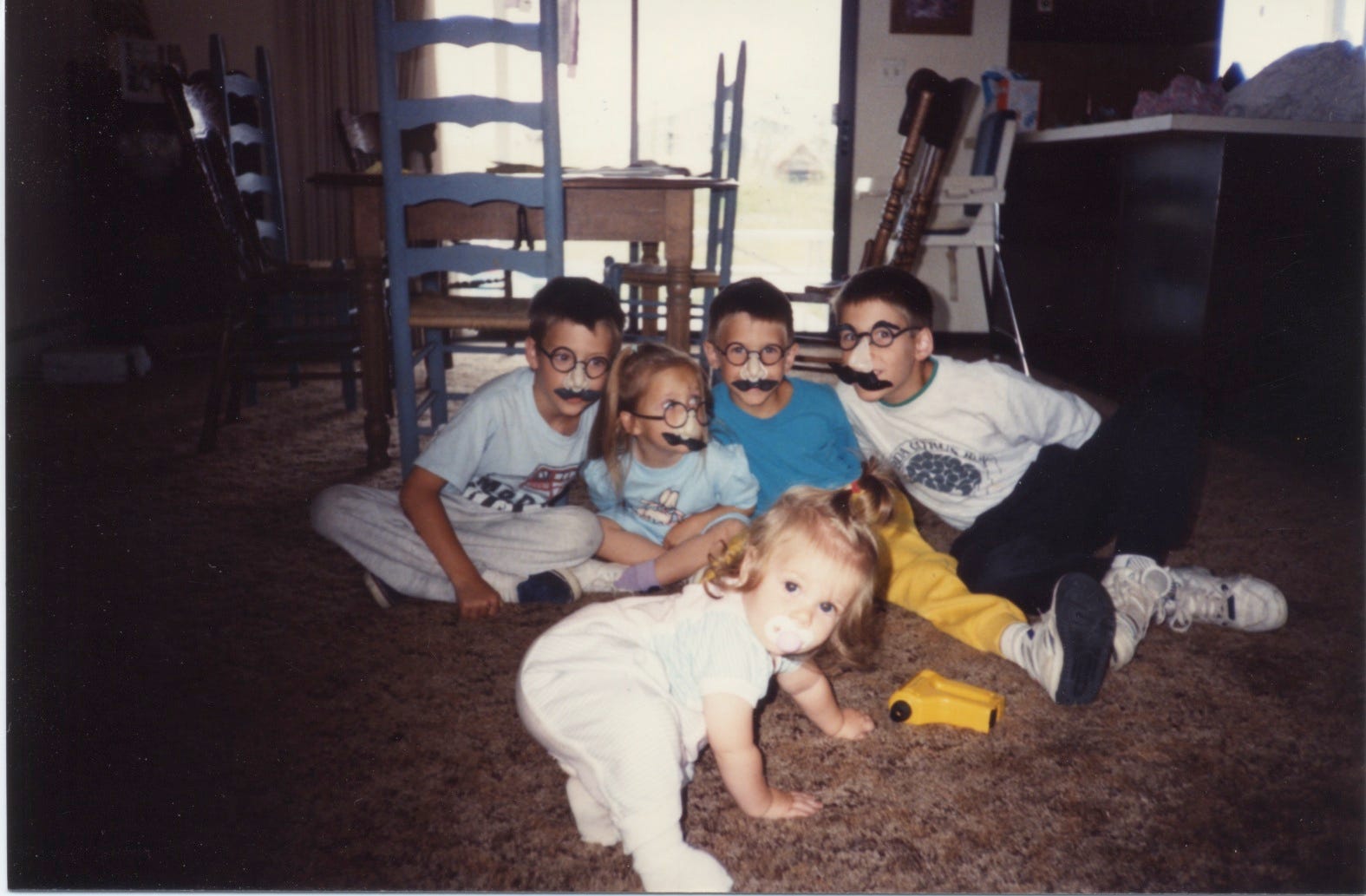
More than many kids my age, my childhood home was pretty much my entire world. Not just where I slept and ate, but literally where I grew up, played, discovered my passions and hobbies… discovered myself. Once I got to high school and the turbulent teens, I couldn’t wait to leave this home and fly off to somewhere more “exciting.” But during my very first semester away from home in my freshman year of college, my family decided to move out of state and sell this childhood house.
Maybe that is the location of this deep rupture I feel, and why I connect with Spielberg’s lost boys. I’m not convinced of that idea—but the experience did hurt a lot, and something precious was suddenly, unexpectedly lost.
But that episode was also just a metaphor for life; even if our parents never leave the home we grew up in, we can never truly go home again. I tried several times, returning to Colorado for whole summers as a young adult, driving out to the old house, retracing my old haunts. It was nice to make contact with these sacred places, and letting myself sit (or wallow) in nostalgia can be cathartic. But it isn’t possible to bring childhood back.
E.T. understands that—and accepts it. A river of quiet grief runs through this funny, sweet, charming, magical tale. In the end, Elliott begs E.T. to stay, but E.T. has to leave. That home is empty now; the kids are all grown up. We shouldn’t helplessly curl up in our boyhood closet too often; it’s not healthy. But for two hours, every time I watch this movie—with John Williams’ wordless opera of religioso mystery, longing, grief, and catharsis—I can reach out and touch the little boy I used to be… and it is healing.
Why'd you have to make me cry on such a nice Tuesday morning?
Wonderfully framed. I never noticed the constant use of the bedroom closet as a significant location before.
You need to do an updated/revised version of the Williams biography and include all these write ups as an ‘appendix' of sorts.